
Botswana’s bid to legalise equal marriage met with religious pushback
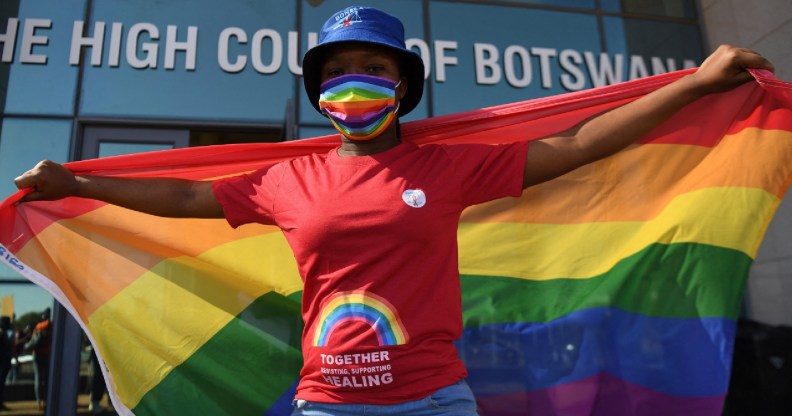
Activists carry a rainbow flag outside the Botswana High Court on October 12, 2021 (Getty Images)
A bid to legalise same-sex marriage in Botswana has been met with opposition from the church and cultural groups.
Appearing in court on 14 July, gay couple Bonolo Selelo and Tsholofelo Kumile challenged the government in an attempt to overturn the current ban on same-sex marriage. They argued that Botswana’s Marriage Act is unconstitutional as it details that only a “bride” and “bridegroom” can marry.
According to AFP, court papers confirm that the couple were denied permission to register their marriage in 2025 and were told by officials to marry in South Africa instead.
The bid from the couple has received a certain amount of pushback from religious and cultural groups.
Dingwetsi Association, a non-profit that champions traditional marriage and opposes divorce, said that the case was “likely to have a cultural impact because the country’s customary law only recognises marriage between a man and a woman”.
A lawyer for the Evangelical Fellowship of Botswana also weighed in on the case, saying the group believes same-sex marriage “goes against the beliefs of their members who are Christians”.
Same-sex relationships in the country were decriminalised by Botswana’s High Court back in 2019. Before then, it was punishable by up to seven years in prison.

Botswana is one of the 22 African countries, including Mozambique, Namibia and Rwanda, that have legalised same-sex relations, reversing colonial-era laws.
Botswana is only one of three countries in the continent that have anti-discrimination protections for LGBTQ+ people in place, alongside Mauritius and South Africa. The latter is also the only African country that allows same-sex marriages.
In April this year, Botswana officially removed its anti-sodomy law, closing the chapter on a colonial-era provision that criminalised same-sex intimacy.
Section 164 of the country’s Penal Code had already been ruled unconstitutional in 2019 by the High Court of Botswana, with Judge Michael Leburu saying at the time: “Human dignity is harmed when minority groups are marginalised.”
An appeal was dismissed in 2021, rendering the law unenforceable, but it had since been formally repealed, according to Mamba Online.
The update, carried out by Attorney General Dick Bayford, removed the sections targeting same-sex relations, leaving only provisions relating to bestiality.
LGBTQ+ advocacy group LeGaBiBo welcomed the move, calling it a clear signal that queer people “are not criminals” and deserve protection.
They added: “For many, these provisions were not just words on paper – they were lived realities. They affected access to healthcare, safety, employment, and the freedom to love and exist openly.”
Share your thoughts! Let us know in the comments below, and remember to keep the conversation respectful.