
Unions boycott Labour Women’s Conference over trans ban
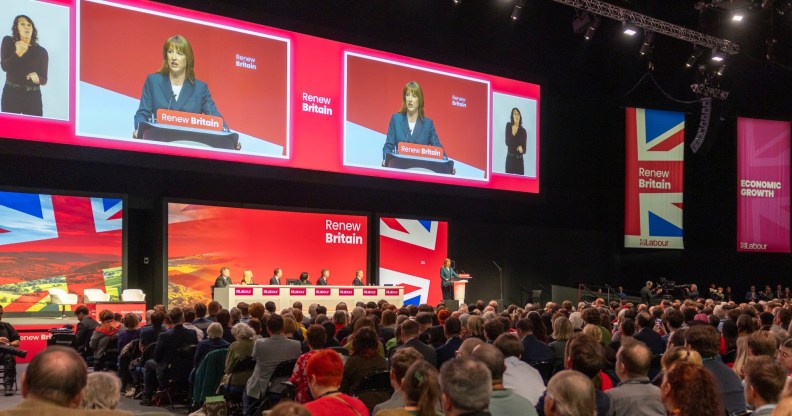
Labour Party Conference in 2025 (Getty Images)
A number of powerful Labour unions have pledged to boycott the party’s upcoming Women’s Conference over its exclusion of trans women.
The National Annual Women’s Conference is set to take place in Liverpool on 26 September with the aim of enabling women to better participate in policy making and gives them the opportunity to share ideas with delegates.
In December 2025 however, Labour’s National Executive Committee voted to ban trans women from formal proceedings – including the main hall speeches and policy debates – at this year’s conference.
Unions like Unison, Aslef, Usdaw, and the Musicians’ Union will no longer be attending in protest over the ban, Metro reported on 29 July.
The unions, which are among Labour’s largest financial backers, have said that the ban does not align with their stance on trans inclusion.

A spokesperson for Unison said: “The union’s decided against sending a delegation to Labour women’s conference this year. This is because the party’s restrictions on access run counter to UNISON’s policy on trans equality.”
Unison, which represents more than 1,300,000, has donated over £43,000,000 to Labour over the last 25 years.
Usdaw, which represents shop workers, said it has decided not to send a delegate because “the party has excluded trans women, which runs counter to Usdaw’s policy on trans equality”.
Last year, Labour cancelled their 2025 Women’s Conference following legal advice in relation to the UK Supreme Court’s ruling on the definition of ‘women’ in the Equality Act 2010.
Labour for Trans Rights told Metro: “For decades, trans women members have had a home in Labour’s structures, and it’s not acceptable that they’re being so blatantly excluded.”
They continued: “The trade union movement – including the Labour-affiliated unions – have been incredible allies to the trans community. We hope that they’ll continue to use their influence in the Party to shift the new government towards a far more inclusive position.”
Share your thoughts! Let us know in the comments below, and remember to keep the conversation respectful.