
EHRC’s single-sex spaces guidance now in place in England, Scotland and Wales
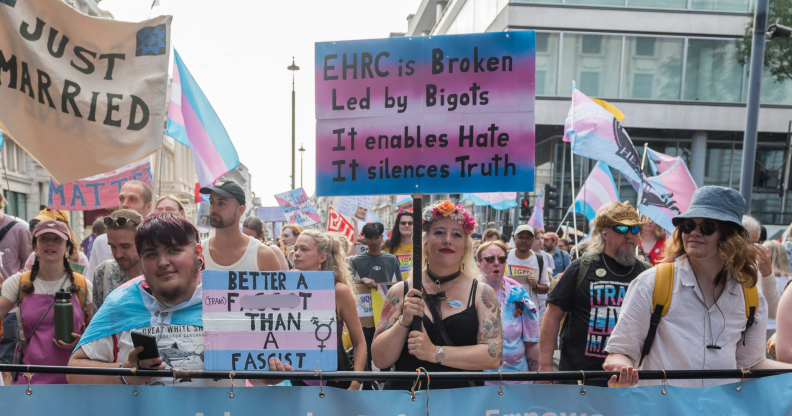
Trans advocates and MPs alike have criticised the guidance. (Image: Getty)
Public single-sex spaces such as toilets, changing rooms and rape crisis centres are now organised by sex assigned at birth as of today (5 August) in England, Scotland and Wales.
The government guidance, which was first published by the Equality and Human Rights Commission (EHRC) in June, says that transgender people should use either gender-neutral facilities or those that align with their sex assigned at birth as opposed to their gender identity.
The new guidance has been met with criticism from trans rights advocates and MPs alike. In July, the Scottish Greens urged the UK government to scrap the code, calling it “authoritarian and cruel.”
“It will cause real harm to trans people who have accessed these spaces and services for years without incident,” said the party’s equalities spokesperson, Kate Nevens.
“Trans people want the same thing as everyone else, to live their lives free from prejudice, discrimination and violence. Instead, this guidance will legitimise intrusive questioning, encourage suspicion and make everyday life less safe,” Nevens told the National.

Nevens also called the code “confusing, divisive and unworkable,” and that it won’t just affect trans people but “anyone who doesn’t conform to gender stereotypes.”
Devastating impact
The Good Law Project also called the new code of practice “harmful” and said that it will “exclude and segregate trans people.”
The impending code of practice is not legally binding, but it “strongly encourages” businesses, service providers and associations to offer only single-sex services based on biological sex, as per the Equality Act 2010.
“It is set to have a devastating impact on trans people’s lives,” the Good Law Project said in a statement shared on 15 July.
“The code says that offering single-sex services only according to ‘biological sex’ is likely to indirectly discriminate against trans people,” the statement continued.
“But instead of saying that organisations can provide trans-inclusive services, the guidance treats trans people like a third sex, suggesting they have to use separate ‘third’ spaces and services, rather than the ordinary ones provided for men and women.”
The Good Law Project then went on to highlight that forcing trans people to use third spaces will create “stigma” and “risks outing them”.