Good Law Project blasts ‘harmful’ code of practice that ‘segregates’ trans people
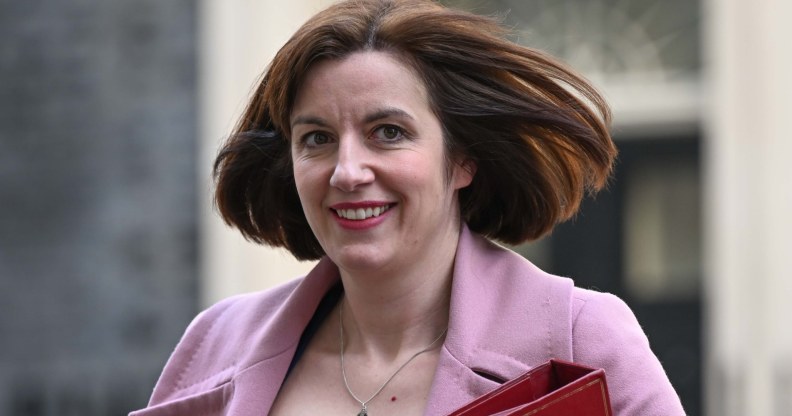
Bridget Phillipson (Anadolu via Getty Images)
The Good Law Project has called UK equalities minister Bridget Phillipson’s new code of practice, which will apply from 5 August, “harmful” and said that it will “exclude and segregate trans people”.
The impending code of practice is not legally binding, but it “strongly encourages” businesses, service providers and associations to offer only single-sex services based on biological sex, as per the Equality Act 2010.
“It is set to have a devastating impact on trans people’s lives,” the Good Law Project said in a statement shared on 15 July.
“The code says that offering single-sex services only according to ‘biological sex’ is likely to indirectly discriminate against trans people,” the statement continued.
“But instead of saying that organisations can provide trans-inclusive services, the guidance treats trans people like a third sex, suggesting they have to use separate ‘third’ spaces and services, rather than the ordinary ones provided for men and women.”
The Good Law Project then went on to highlight that forcing trans people to use third spaces will create “stigma” and “risks outing them”.
‘This will cause serious harm’

“A trans woman who goes to the pub with the rest of her female friends would have to explain why she can’t go into the women’s toilets with them,” the statement said. “And third services or spaces are often not up to scratch – denying trans people access to vital services and pushing them out of public life. This will cause serious harm.”
The non-profit called the approach “exclusionary” and said that other groups will be affected too, like cis women, who will face increased gender policing, and disabled people, who will have less access to accessible toilets if they double as “third” spaces.
The commencement order, which was signed by Phillipson, has also come under fire from the Good Law Project.
“There was no debate, and no proper consultation with those most likely to be affected, including women, trans people, and disabled people,” the statement said.
It detailed that the only action in the House during the “so-called” 40-day scrutiny period was an early day motion calling for the government to reject the guidance, which was signed by 166 MPs – the highest number of signatures for an early day motion since 2020.
Jess O’Thomson, trans rights lead at Good Law Project, said that the code of practice is “incredibly dangerous and likely to cause unlawful discrimination”.
“It is abhorrent that despite widespread opposition this government has continued its attacks on trans human rights,” O’Thomson said.
“The code is not only discriminatory, but utterly unworkable in practice – as so many organisations have repeatedly pointed out. The guidance gets the law wrong, and if service providers uncritically follow it, they may be acting unlawfully. Worse than that – they will be causing immense harm, and helping to strip trans people of their rights.”
Share your thoughts! Let us know in the comments below, and remember to keep the conversation respectful.