
A third of award-winning short film’s crew were trans+: ‘A beautiful environment’
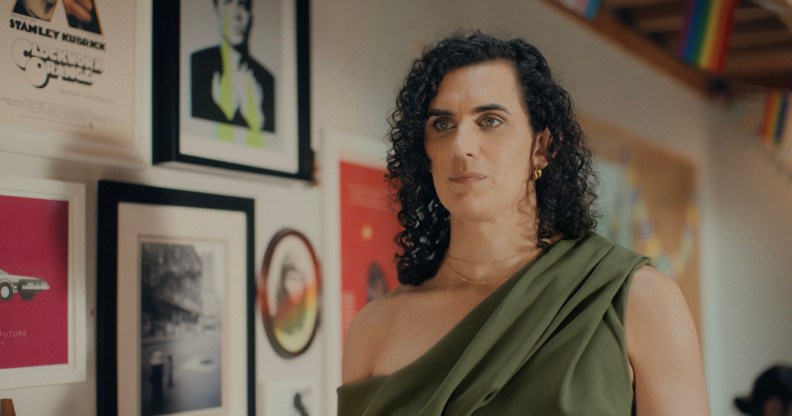
Sophia Vi, the writer, actor, and producer of Koupepia. (Koupepia Film)
If there’s one thing Koupepia, the award-winning short film from writer-actor Sophia Vi, does besides telling a heart-felt trans story, it’s show how easy it is to establish an environment where everyone is able to do their best work.
It sounds a simple thing but it’s not a given, especially for trans people, as Vi can attest. The writer, who is trans, recalls one experience on the set of a PrEP advert where it became apparent that not everyone knew what was being marketed. When told, they weren’t all on board.
“There was some anti-LGBT rhetoric, some anti-trans rhetoric,” says Vi, who advocated for herself and others to ensure there was zero tolerance to any negativity. But, she adds, she shouldn’t have been put in that position in the first place.
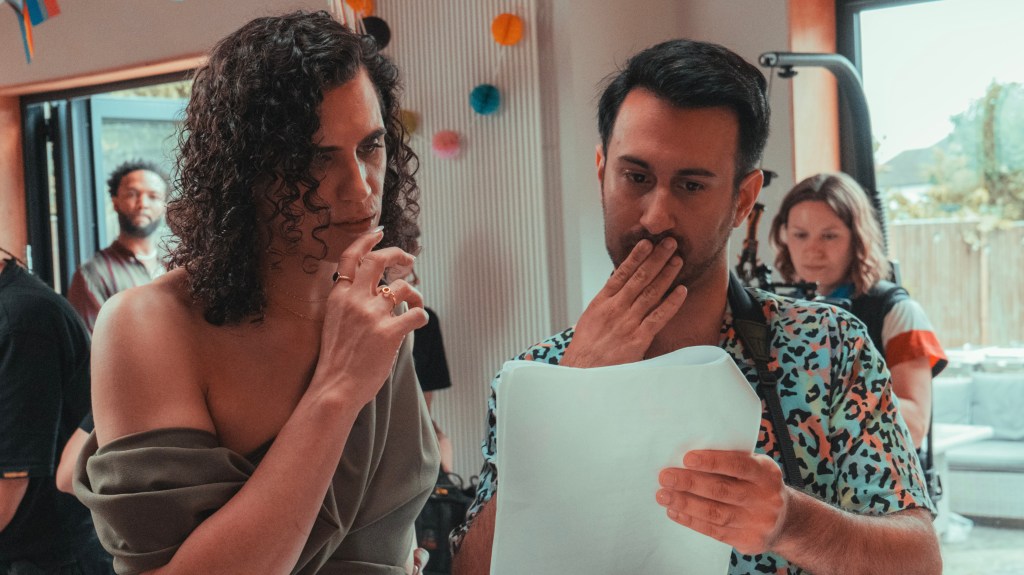
Had Trans+ On Screen, a directory for trans+ and non-binary professionals in film and TV, been there, “I would’ve been able to turn up and do my job to the best of my ability,” she says. “And I felt I couldn’t.
“Having somebody to advocate for me before I get on set is the work that needs to be done.”
While in this instance the producers and others did “correct themselves,” there’s no getting around the fact that establishing a safe environment was not Vi’s job. And all that happened just two years ago.
Koupepia follows Petros, played by Peter Polycarpou, who attends a party to mark son Michael’s (Alexander Theo) engagement to David (Nathan Vaughan Harris).
It’s clear that while Petros is tolerant of his son’s homosexuality, he’s not entirely comfortable with it. By talking to Eleni (Vi), a British Greek Cypriot trans woman, over a plate of koupepia, a Cypriot dish of ground beef and pork, rice and sauce, wrapped in vine leaves, he’s able to get closer to accepting his son’s sexuality.
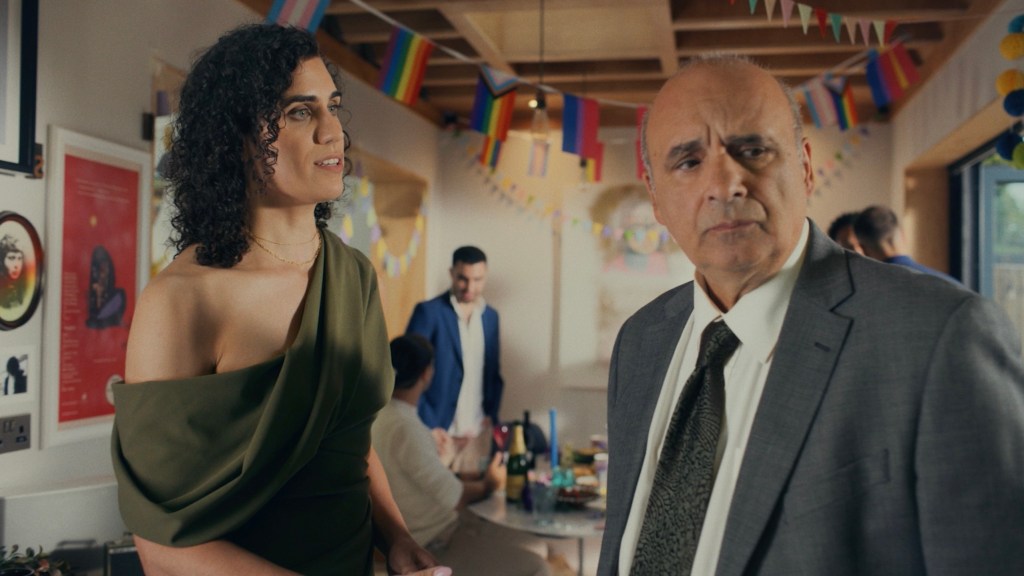
As well as its narrative, what makes the film unique is the trans+ representation behind the camera.
To bring the film to life, Vi and director Yorgo Glynatsis collaborated with Trans+ On Screen to employ a production crew of around 35 people, one-third of whom were trans or non-binary. Beyond that, Vi reckons 95 per cent of the cast and crew identified as LGBTQ+, a proportion rarely seen in the industry. A safe and welcoming set was essential for both creatives.

“Even though I’m a trans woman and Yorgo’s a gay man, that doesn’t mean we’re necessarily going to do the best. It doesn’t mean we’ve automatically got a pass on our set,” says Vi.
Trans+ On Screen were able to ensure people felt safe and valued. The result? “It felt like a set that was so gorgeous and wonderful and everyone you see playing Cypriots on screen are British Cypriot,” Vi continues.
And Glynatsis says: “It felt like a very authentic set where people didn’t have to hide identities. People didn’t have to pretend. It’s really rewarding as a director that people feel good and happy to work with me and the rest of the team.”

Glynatsis has also had bad experiences on film sets, from his days as an actor. These led him to producing and directing, wanting “to create sets where people feel safe, authentically themselves”.
He goes on to say: “I want them to feel comfortable. We can ask questions and if there is something wrong, they can come to me. I want to be a better human being, a better director, a better ally. I’m open to be educated.”
Koupepia demonstrates that improving representation isn’t difficult, it takes just a few simple steps to create an environment where people are able to show up and do their best, ensuring a better end result.
“It’s not a big thing,” Glynatsis insists. “Some production companies make it sound like you’re asking so much. No, we’re just asking you to be understanding. Are you comfortable [on set]? So, why can’t I and trans people be comfortable?”
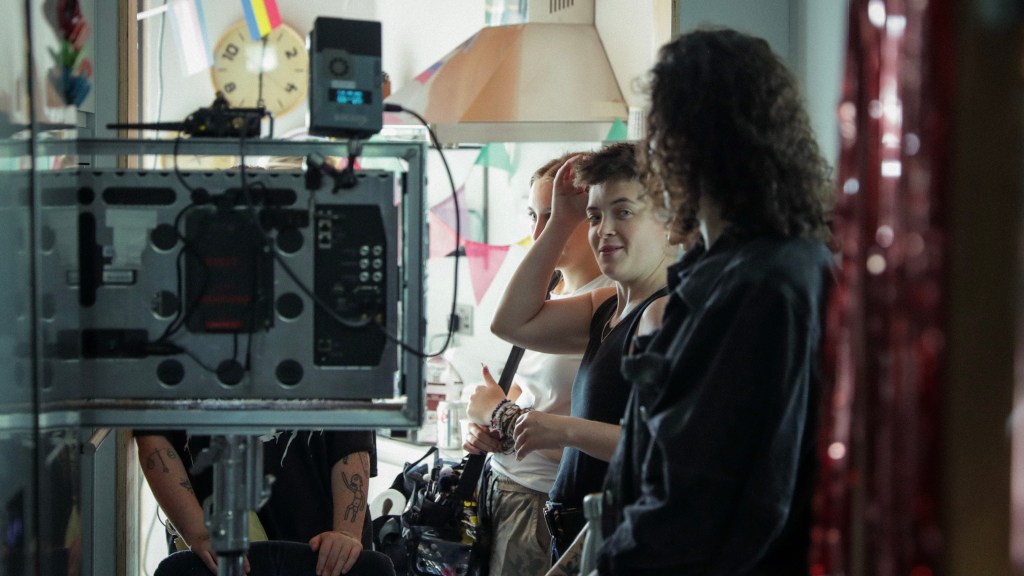
Vi feels admits that had they hired a straight, cisgendered crew, practically speaking there’d be little to no difference in how the film looks. The key change was the atmosphere on set and the understanding of the movie’s messaging.
“It meant we didn’t have to explain what this film was about,” she says. “It [also] made a beautiful environment on set and made the project easier. Everyone we hired was the right person, an industry professional who just happened to be a bit trans or a bit of the alphabet mafia!”
Koupepia is coming to the end of its festival circuit. Along the way it’s picked up awards and it’s hoped there will be an online release next year as well as a future in a longer-form medium.
At a time when diversity and inclusion initiatives seem out of vogue, thanks in part to the US government, if you want proof that people who say those initiatives aren’t beneficial are talking b******t, point them to Koupepia.
Share your thoughts! Let us know in the comments below, and remember to keep the conversation respectful.