
Spain confirms it will not broadcast 2026 Eurovision Song Contest due to Israel’s participation
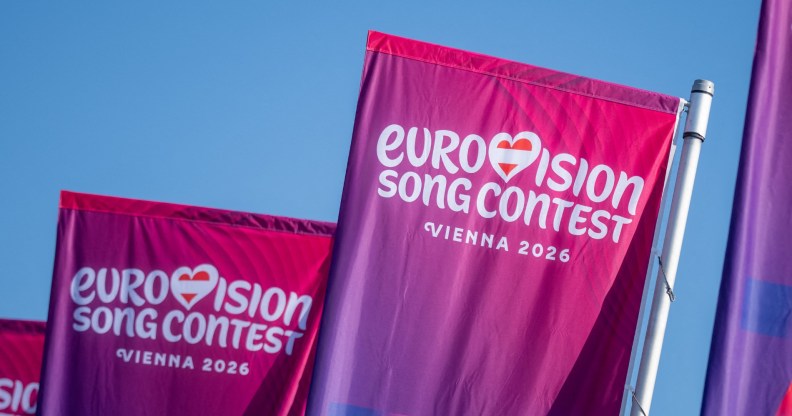
Spain back out of broadcasting the 2026 Eurovision Song Contest. (Georg Hochmuth/Getty)
Spain’s public broadcaster, RTVE, will not air the 2026 Eurovision Song Contest.
This will mark the first time the show won’t be broadcast in the country since it began participating in 1961.
This is the latest announcement that throws Eurovision into the spotlight. This year’s contest will be held in Vienna, Austria. This is after Austrian singer JJ won last year with his operatic ballad, “Wasted Love”.
EurovisionFun reported the news on Thursday (16 April), stating the decision was informed by Israel’s continued participation in the face of the ongoing, deadly conflict in Gaza. There were also initial reports in late 2025 that RTVE announced it will not participate in or broadcast Eurovision 2026, though the media focus at the time was mainly on Spain’s decision not to compete in this year’s competition.
The report details that RTVE officials said the contest’s mission of neutrality had become “impossible to maintain.” Furthermore, they described the event’s current climate as one of “political distrust.”
This is the furthest measure a country has taken so far in the competition’s largest boycott.
The Netherlands, Ireland, Slovenia, and Iceland have also confirmed they will not be partaking in this year’s competition. However, despite withdrawing, many of these countries are still expected to broadcast the show. The exception is Slovenia, where broadcaster RTVSLO has confirmed it will not show the contest at all.

Spain is one of Eurovision’s ‘big five’ – the countries whose broadcasters are the contest’s biggest financial contributors to the European Broadcasting Union (EBU). The ‘big five’, as well as Spain, includes the UK, France, Germany, and Italy.
The country has withdrawn its funding.

Because of Spain’s boycott of participation and broadcast, the country has withdrawn its funding.
In 2025, Spain’s Culture Minister Ernest Urtasun backed the argument that Israel should not take part. Now, Urtasun described RTVE’s move as “brave.”
He also noted that, per EurovisionFun, “cultural events should not provide a platform for states involved in ongoing humanitarian crises.”
Despite the ongoing and mounting criticism of Israel’s participation, the Eurovision semi-finals kick off on 12 May. There will be performances from Moldova, Sweden, Croatia, Greece, Portugal, Georgia, Finland, Montenegro, Estonia, Israel, Belgium, Lithuania, San Marino, Poland and Serbia.
Germany and Italy, who automatically qualify for the grand final, are also scheduled to perform.
In semi-final two on 14 May, there will be performances from Bulgaria, Azerbaijan, Romania, Czechia, Armenia, Switzerland, Cyprus, Latvia, Denmark, Australia, Ukraine, Albania, Malta and Norway.
Luxembourg are also scheduled to perform in semi-final two, as are Austria, France and the UK, who automatically get through to the final.
The UK are pinning their hopes on Look Mum No Computer’s “Eins, Zwei, Drei”, which is already making history as the first song in UK Eurovision history to not be sung entirely in English.