
Thousands more LGBTQ+ Australians can now donate blood after major rule change
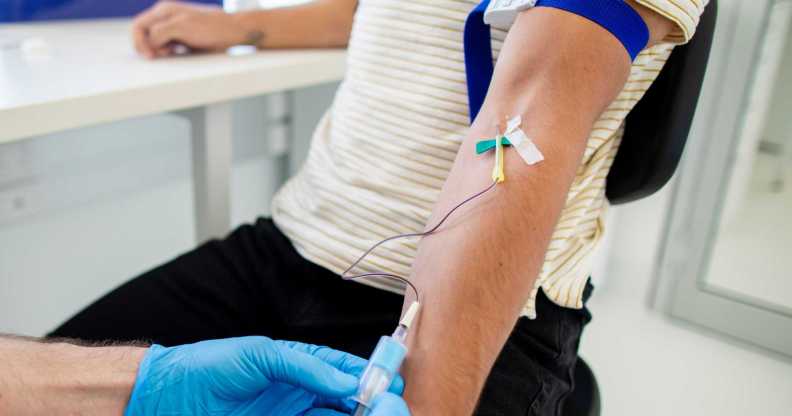
More LGBTQ+ people can now donate blood. (Getty)
Thousands more gay and bisexual men and transgender people are allowed to donate blood in Australia from 20 April following a major rule change.
Previously, many people from the LGBTQ+ community were not eligible to donate blood if they had had sex with anyone in the last three months, even if they were in monogamous relationships. The outdated rule was in place in response to the HIV pandemic in the 1980s.
However, Australian Red Cross Lifeblood has now announced that all potential blood donors will be asked the same questions about their sexual activity ahead of their donation, regardless of their gender or sexual orientation.
The new rules mean that queer men and transgender people will be permitted to donate blood if they are in long-term monogamous relationships and meet other criteria such as age and iron levels.

Lifeblood CEO Stephen Cornelissen said of the change: “This is something we’ve been researching and working on for some time together with governments, LGBTQIA+ advocacy groups and the broader community. We’re excited to be welcoming many more new donors into our centres to donate blood and platelets from today.”
He continued: “We know previous rules have been difficult for people in the LGBTQIA+ community, so we’d like to thank them for their support during this journey towards a more inclusive donation experience. We hope many more people will feel welcomed in our donor centres from today, and sign up to become blood donors, as a result of this change.”
It is expected that the rule change will attract up to 20,000 new donors from the LGBTQ+ community.
Those still ineligible to donate blood will be able to donate plasma instead under last year’s rule change, which allowed sex workers and queer people to become plasma donors even if they had engaged in sexual intercourse in the last three months.
That rule change resulted in 10,000 plasma donations from around 3,000 new donors, 7news reported.
“While the rules were put in place to ensure a safe blood supply in the past, we know they have contributed to the stigma faced by many and hope today will be a turning point for Lifeblood and the LGBTQIA+ community and that people will feel welcome to come forward to donate their life-saving plasma,” Cornelissen said.
Share your thoughts! Let us know in the comments below, and remember to keep the conversation respectful.