
Patagonia, Pattie Gonia and the pink glass ceiling
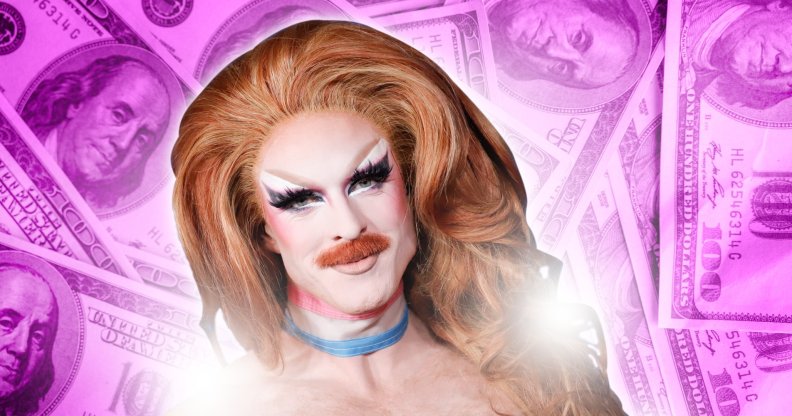
Pattie Gonia (Getty Images)
Pattie Gonia has hit the pink glass ceiling. The moment she tried to turn her drag persona into a trademark, Patagonia, the outdoor apparel giant sued her, and an all-too-familiar queer paradox snapped into focus: visibility might be welcome, commercial ownership is not.
In September 2025, drag queen and activist Pattie Gonia filed a trademark application for the “Pattie Gonia” name. That was a step too far for Patagonia. Alleging Pattie was infringing their logo, the company took her to court. This week, after months of silence, Pattie Gonia broke cover: to Patagonia’s list of settlement demands Pattie responded with two words: “no deal“.
Patagonia is seeking just $1 in damages, but Pattie Gonia says the real threat is over $1million in legal fees and, ultimately, the right to use her name.
Drag’s visibility trap
Drag queens referencing and playfully parodying brands or celebrities is nothing new. Drag has always mined consumer culture for its aesthetics and wit: Trixie Mattel riffs on the Barbie toy company, Tina Burner on Tina Turner, and Brita Filter on the water brand.
Pattie Gonia has been performing under her name since 2018. Even Patagonia doesn’t dispute that. And she’s pointed out that her name, much like the company’s name, is actually a nod to the Patagonia region of South America which existed centuries before fleece jackets did.
For years there was an informal “gentlewomen’s understanding”: companies accepted the wordplay, occasionally embraced it. The queens got to be campy, the brands got culturally cool. Nobody lawyered up. So, what changed?

The answer is simple: Pattie Gonia tried to own her name.

Trademark law exists to tell consumers who made what. The Swoosh, for example, means Nike, not someone else. It gives brand owners the right to object to uses that “confuse consumers” or “dilute” their brand’s reputation. This is exactly what Patagonia is alleging: that consumers will be confused to think that Pattie Gonia’s merch is made by Patagonia, and that her use of logos similar to theirs will dilute their brand. Parody can sometimes be a legal defence, but it tends to dissolve the moment a T-shirt goes on sale, and the informal “gentlewomen’s understanding” carries no legal weight.
And that is precisely the catch-22 drag is currently experiencing. Drag has undergone one of the most remarkable cultural transformations of recent times: from the margins of queer nightlife to the global mainstream. With that visibility came real economic opportunity. Queens, reasonably, wanted in. But the moment a queen formalises her identity through trademark registration, she steps onto corporate terrain governed by rules designed for corporations, not for her.
The pink glass ceiling
This is perhaps where the law’s structural irony bites hardest. Trademark law treats LGBTQI+ symbols as belonging to the public domain: no one owns them, so anyone can use them. Corporations do so, enthusiastically, every June. In fact, Patagonia uses the Progress Pride flag in its marketing. But queer artists who try to do the same in reverse: borrowing from mainstream corporations, might find the law’s generosity does not extend to them. The law’s traffic flows one way: companies can borrow from queer culture; queer artists cannot borrow back without risking legal action.
The dominant narrative frames this lawsuit as a corporation trying to silence a drag queen, and that may well be true in effect. Pattie Gonia has said the lawsuit would “break the whole ecosystem of advocacy and community engagement” she has spent years building. But the deeper issue is structural. Queer artists may be welcome in the mainstream as cultural currency, as aesthetic inspiration, as Pride campaign faces. They are not welcome when their commercial activities extend beyond traditional drag performance. There is no explicit rule against it. It is simply trademark law applied in a legal system built around commercial incumbents with deep pockets.

Drag’s newfound visibility is real. So are the opportunities it has created. But the Pattie Gonia case is a reminder that for queer artists who try to formalise and monetise their identities, the welcome mat only stretches so far.
Dr Eden Sarid is a Lecturer of Intellectual Property Law at King’s College London. His forthcoming book: Queens of Creativity: Drag, Social Norms, and Cultural Production Beyond Intellectual Property (Cambridge University Press, 2026), examines intellectual property and drag culture.
Share your thoughts! Let us know in the comments below, and remember to keep the conversation respectful.