The most sapphic moments of 2025 – lesbian boyfriends, biphobia wars and Gelphie

(Netflix/Universal Studios/Chappell Roan)
Its been a big, busy old year for the sapphics. From music, to film, community and seemingly endless discourse on social media, there is a lot to unpack from 2025.
Of course, we can’t include everything but here is our list of the *most* sapphic moments of 2025.
Lily-Rose Depp sparking a “lesbian boyfriend” debate
Kicking off the year in the most chronically online lesbian way, January saw sapphics debating the term “lesbian boyfriend”.
Discussions were prompted after Nosferatu star Lily-Rose Depp described her female partner – rapper singer Danielle Balbuena who goes by the stage name 070 Shake and uses she/her pronouns – as her “boyfriend”.
“I have a locket of my boyfriend’s hair,” Depp told MTV in an interview promoting Robert Eggers remake of the 1922 film when asked about romantic gestures from the past that should come back. “I like lockets,” she explained, adding: “I think they’re very romantic.”
Some were left confused by Depp’s language: “Why is she saying bf???” / “BOYF????????” / “She calls her boyfriend??”
It led some to assume the couple had broken up or Depp was in a poly relationship with a cis man alongside 070 Shake, whilst others began transvestigating the rapper.
The truth? That is the language Depp and 070 Shake like to use in their own relationship, which is none of our business.
If you are still curious though, the concept of a “lesbian boyfriend” – the modern term for an age-old identity – goes back as long as sapphic history itself.
Lesbians and queer women have a long and winding history, a unique culture within the LGBTQ+ community and an extensive glossary of terms and identities that nearly all have their roots in opposition to patriarchy and heteronormativity, alongside – of course – loving women.
There is no one single way to be a lesbian or queer woman, and this includes everyone from bull dykes, mascs and butches, to femme and gender-non-conforming folks. Within this, people in the community can be cis, trans and non-binary, ace or allo, and use various pronouns and terms to describe themselves when in a relationship.
A lesbian boyfriend is just one way that queer relationships can play, re-orientate and transform heterosexual, cisnormative gender roles.
As Them pointed out: “The naming of a ‘lesbian boyfriend’ is often not as much a rigid label, like how we view pronouns and gender identity today, but more a playful or perfunctory acknowledgment of someone who contains multiple gender expressions their partner wants to honour, and though ‘lesbian’ and ‘boyfriend’ seem to be in opposition to each other, the term conjoins them with ease and validation.”
Lucy Dacus and Katie Gavin recreate an iconic Vanity Fair cover
In an ode to an iconic moment of queer culture, Lucy Dacus and Katie Gavin came together to recreate k.d. lang and Cindy Crawford’s August 1993 Vanity Fair cover.
The original cover, shot by photographer Herb Ritts, featured lesbian musician lang in a barber chair while supermodel Crawford appeared to shave her face with a straight razor.
The recreation of the cover had boygenius favourite Dacus as lang, lounging in a barber’s chair, while wearing a suit and tie. Gavin is seen in a bodysuit and heeled boots, ready to give her a shave.
To celebrate 30 years since the cover shoot, in August 2023 Crawford reposted the image to her Instagram page, writing: “Herb called me the night before to see if I wanted to be part of this shoot, which was considered a bit risqué at the time — challenging gender stereotypes.
“Still one of my favorite cover shoots, I’m so proud to have been part of it.”
Dacus, who this year confirmed her romantic relationship with bandmate Julien Baker, released her major label debut album Forever is a Feeling to wide praise.
The Great Biphobia Wars of 2025
The middle part of this year was, unfortunately, awash with biphobia and – more unfortunately – a lot of it came from within the queer community itself.
In short, former Dance Moms star turned media personality and “gay pop” singer JoJo Siwa, sapphic songstress Fletcher and “Guess” hitmaker Billie Eilish were all subject to intense debate, discussion and backlash for getting into relationships with men.
If you aren’t chronically online, here is a more detailed summary of what happened for each of them to become pariahs.
Siwa, who dated several women after coming out as gay in 2021, was in a relationship with non-binary Australian DJ Kath Ebbs when she entered the UK’s edition of Celebrity Big Brother in April alongside former Love Island contestant turned horse racing pundit Chris Hughes.
The two quickly struck up an unlikely friendship and were often seen whispering and cuddling together, as well as penning each other secret notes that were against the show’s rules. Hughes even defended Siwa when fellow housemate Mickey Rouke made a homophobic comment about her – which resulted in him getting an official warning from producers – and supported her when she came to a realisation about her own sexuality.
The intimacy of their newfound friendship led many viewers to speculate they were romantically interested in one another and that Siwa was emotionally cheating on Ebbs, resulting in trolls leaving nasty comments on Ebbs social media accounts.
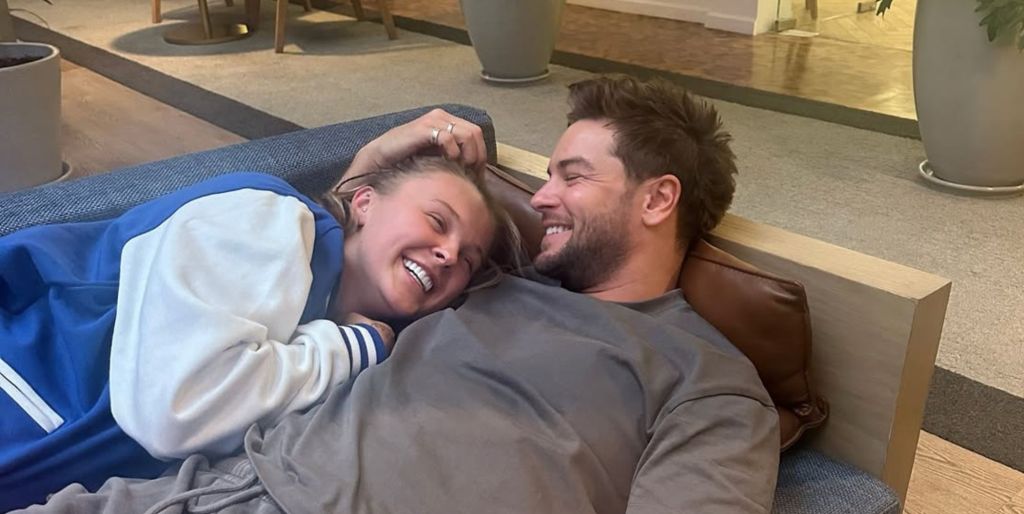
After the two left the Big Brother house there was a whirlwind of speculation about the true nature of their relationship, especially given the fact Siwa broke up with Ebbs at the show’s wrap party. Initially the pair denied a romance but after sharing some loved-up pictures on Instagram and Siwa performing a cover of Kim Carnes’ 1981 hit Bette Davis Eyes, where she changed the lyrics “she’s got Bette Davis eyes” to “Chris Hughes’ eyes”, it was pretty obvious the two were an item.
As fans got to grips with the idea of Siwa dating a cis man, singer Fletcher released her new single “Boy” – a track about falling in love with a man.
“We were counting down, the music stopped/ We were waiting for the ball to drop/ I closed my eyes and I leaned in/ I kissed a boy,” the singer, Cari Elise Fletcher, crooned about kissing a man.
“And I know it’s not what you wanted to hear/ And it wasn’t on your bingo card this year/ Well, it wasn’t on mine/ I fell in love/ And it wasn’t with who I thought it would be/ And I’m scared to think of what you’ll think of me,” she continued, in reference to what her fans might think about her.
Whilst the singer always described her sexuality as queer, she garnered a strong, sapphic following and much of her music was about her relationships with women, including “Girls Girls Girls”, “She Said”, “Becky’s So Hot”, and “Cherry” – which was a collab with “lesbian Jesus” herself, Hayley Kiyoko.
The track left her fans completely divided.
Whilst many defended her against biphobia and queerphobia, many others were unimpressed with the song’s release during Pride Month and viewed it as something that could be used by conservatives “as ammunition to say, ‘Oh see, there’s still a chance, you just haven’t met the right boy yet.’”
A couple of days later, paparazzi photographs of Billie Eilish kissing actor Nat Wolff in Venice circulated on social media, appearing to confirm romance rumours, and causing the phrase “Is Billie Eilish really LGBTQ?” to start trending online.
Eilish came out as in 2023 and said she is also attracted to women, but later admitted she thought it was “obvious” she is queer.
In the months that followed her coming out, Eilish released her steamy track “LUNCH”, which is all about performing oral sex on a female partner, and collaborated with BRAT icon Charli XCX on the flirty remix of “Guess” – whispering on the track: “Charli likes boys, but she knows I’d hit it/ Charli, call me if you’re with it.”
Both tracks had sapphics in music heaven, with many praising the authentic depictions of queer sex and desire in mainstream pop music.
However, the pictures of her kissing Wolff quickly had some folks questioning the authenticity of her sexuality, accusing Eilish of “queerbaiting” the community.
All of this debate, discussion and backlash to Siwa, Fletcher and Eilish’s personal relationships with men is the dictionary definition of biphobia, which is super gross given the anti-queer political climate we are living in.
Even out and proud pansexual singer Miley Cyrus contributed to the bi-erasure narratives by accusing Siwa of going “back into the closet” by choosing to date a man.
In a clip to promote Dreamland Pride in New York City, Cyrus said that she was “going back into the closet to find JoJo Siwa and bring her back out”. Whilst it was played off as a harmless joke, it perpetuates the incorrect and damaging idea that bisexual people are either gay or straight when they are dating someone of the same or opposite gender, rather than the fact they are just always bisexual.
“Bisexual women with boyfriends are not the enemy right now: that would be the perpetrators of hate crimes, the entire Trump administration, legislators attacking Trans rights, and far-right politicians like Nigel Farage sharing s***** opinions on Gay marriage,” Helen Mirell Thomas, writing for Gay Star News, said.
“To a few loud voices in the community, being the “wrong” side of Bisexual is the equivalent to holding a placard at a Westboro Baptist Church rally, or ripping up a pride flag and making it into a Hooters uniform (come to think of it, that would be c**** af).”
Thomas added blaming any of these women for wider queer erasure is “not only untrue but wildly unfair”.
The Hunting Wives sex scenes
As the summer heated up, so did the TV offerings because The Hunting Wives dropped with some pretty spicy WLW chemistry that had sapphics glued to their screens.
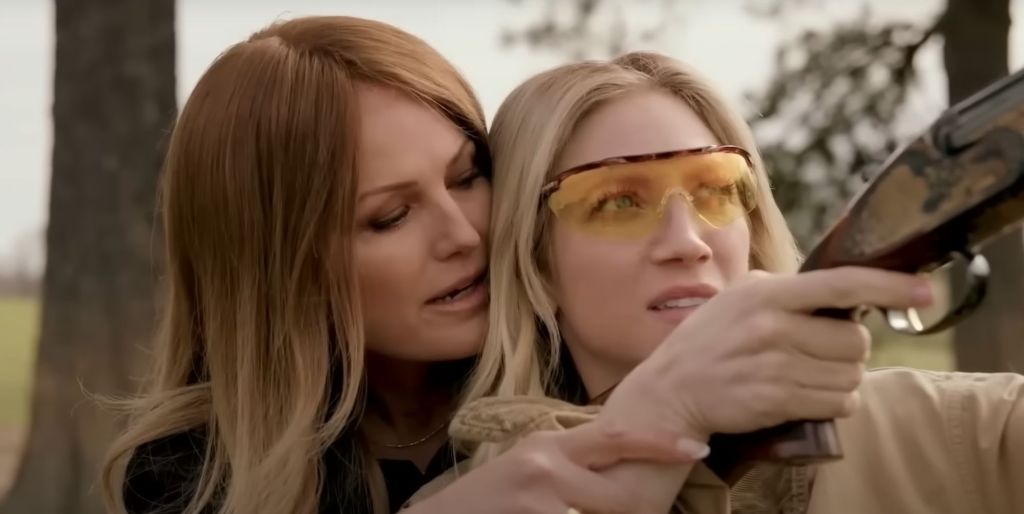
Adapted from the 2021 novel of the same name, the show The Hunting Wives sees Pitch Perfect actress Brittany Snow star as Sophie O’Neil, a woman who moves from the east coast to the fictitious town of Maple Brook, Texas after her husband Graham (Evan Jonigkeit) gets a new job in the state.
She quickly strikes up a friendship with socialite Margo Banks (Malin Akerman) and her elite clique of wives, known as the “Hunting Wives.”
Margo is married to Graham’s new boss, oil tycoon and Texas gubernatorial candidate Jed (Dermot Mulroney). As the relationship between Margo and Sophie becomes close, “maybe too close”, it is “consumed by obsession, seduction, and murder”.
The make-outs? The sex scenes? The chemistry? We were fed by this show.
Don’t worry about The Hunting Wives falling prey to the sapphic cancellation curse – it’s already been renewed for a second season.
Renee Rapp dragging Betty Who
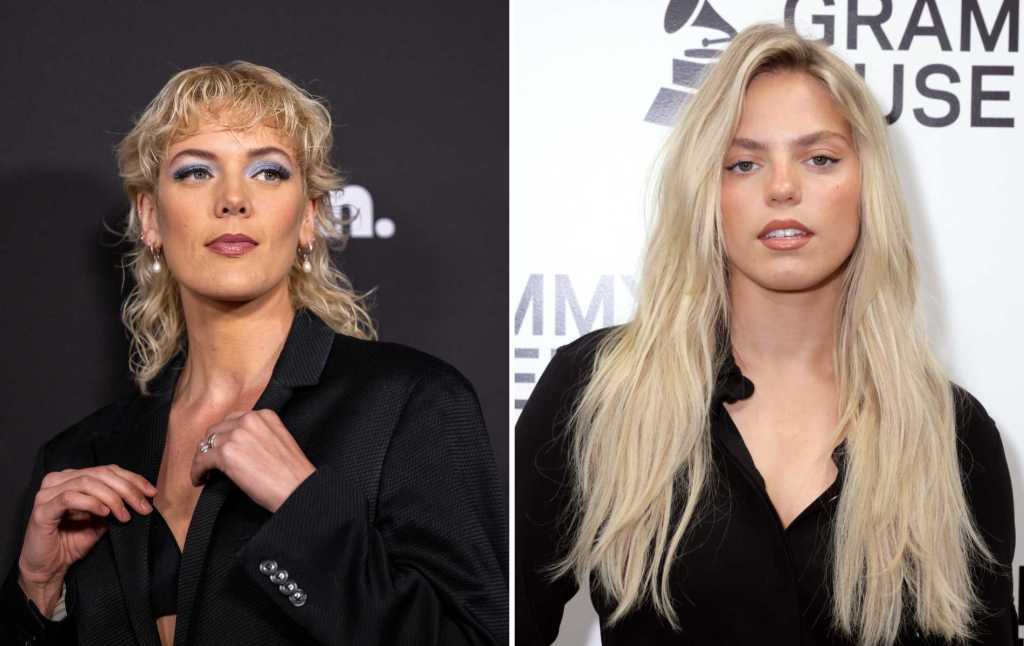
As the summer bled into the start of autumn our timelines were dominated by Betty Who’s controversial comments about Renee Rapp, namely that Rapp – a lesbian – could end up dating a man.
Who, real name Jessica Anne Newham, made the comments on the lesbian focused podcast Made It Out as part of her and host Mallorie Glownke’s discussion about – as aforementioned above – Siwa and Fletcher revealing they were dating men.
The Australian singer, who describes herself as a “queer, bisexual” person and married her husband Zak Cassar in 2020, said the discourse around Siwa and Fletcher’s relationships reminded her of her own experiences.
“I have so much space and love for those women who are probably going through it right now,” the 33-year-old said.
“I think it’s hard when you become representative of something to other people and then you change or you are just following your heart and then that means other people feel that they are not represented any more. The pressure of that is so immense.”
She went on to say a “huge part of queerness is identifying yourself and putting yourself under the alphabet mafia”.
“Like ‘Which one are you?’ and ‘If you change that, I will never forget it!’,” Who said. “As much as it’s funny that Reneé Rapp is like, ‘You’ll never catch me dating a man.’ It’s like, ‘Go off, queen! I love that for you.’ But I also hold space for her in 10 years if she goes, ‘Oops, I met the love of my life and it’s this man, I didn’t mean to.’ It’s like, that’s okay!”
Who went on to say it “shouldn’t be illegal for you to fall in love” and claimed: “It’s kind of like, now we’ve come so far, that our community is so strong, that now it’s like a crime to be straight.”
The backlash was swift.
Firstly, because it is not illegal to be heterosexual anywhere in the world but it is, however, still illegal to be gay in 64 countries in 2025. Secondly, because many felt Who’s comments were inherently lesbophobic and reinforced problematic anti-lesbian tropes, namely that a gay woman ‘hasn’t found the right man yet’.
Who subsequently published a statement where she apologised for her comments and vowed to “do better”.
Rapp, who does not mince her words, addressed the comments in an interview with Cosmo, although she did not name Who directly.
“People are always going for lesbians! Somebody’s gonna bring my name into the conversation if they want to be in the conversation. So no, it doesn’t surprise me at all,” she said.
“I mean, it’s just very similar to the whole, ‘she hasn’t found the right man,’” said Rapp.
“I’m just like, ‘What the f***? What makes you think I’m gonna end up with a man?’ Also, how about don’t talk about me when it comes to a man? I’m very publicly in a very loving relationship with a woman. So I’m not really sure what about that is so blurry.”
Rapp concluded, in her usually blunt way: “Just literally focus on yourself. Don’t bring my big f****** lesbian name into your mouth and into this drama.”
Alexa, play “The Subway” by Chappell Roan
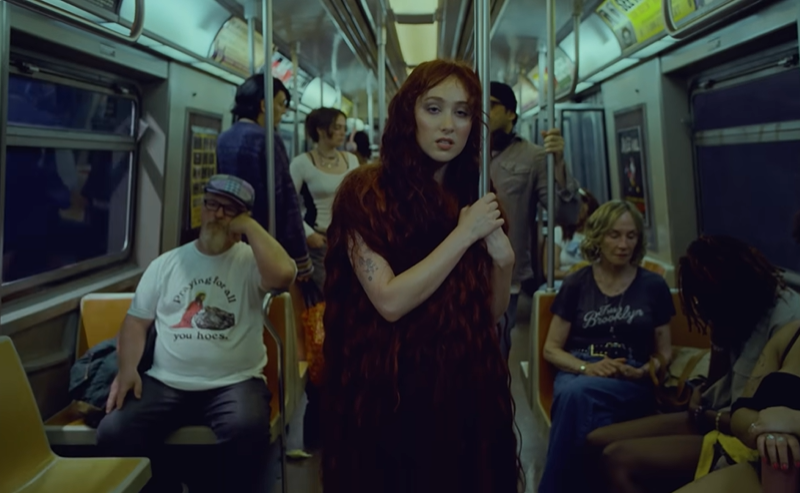
After a stratospheric rise to fame in 2024 – which saw her music zoom up the charts across the world, land her a Grammy and make her a global icon – Chappell Roan finally released a studio version of her heartwrenching, sapphic break-up ballad, “The Subway”.
Have you ever wanted to think about that one brief – but all encompassing – situationship on repeat for hours and hours at a time, yearning and mourning as you scroll through fanedits of Rhaenicent scenes on TikTok? Yes? Well then, just put “The Subway” on loop!
“’Til I don’t look for you on the staircase/ Or wish you thought that we were still soulmates/ But I’m still counting down all of the days/ ‘Til you’re just another girl on the subway,” Roan muses somberly and, my God, did we feel the fine sting of that heartbreak in every note.
The singer debuted “The Subway” back at the New York Governor’s Ball in 2024, while dressed as c**** Lady Liberty. However, the official studio release of the lovelorn ballad was delayed for a time due to recording concerns – much to the ire of fans. The song’s eventual release followed Roan’s sapphic country bop “The Giver” and emotional anthem immediately secured Chappell Roan a UK number one and even led to a spike in tourism interest in Saskatchewan.
Performative masc contests, dyke Santas and… pie eating?
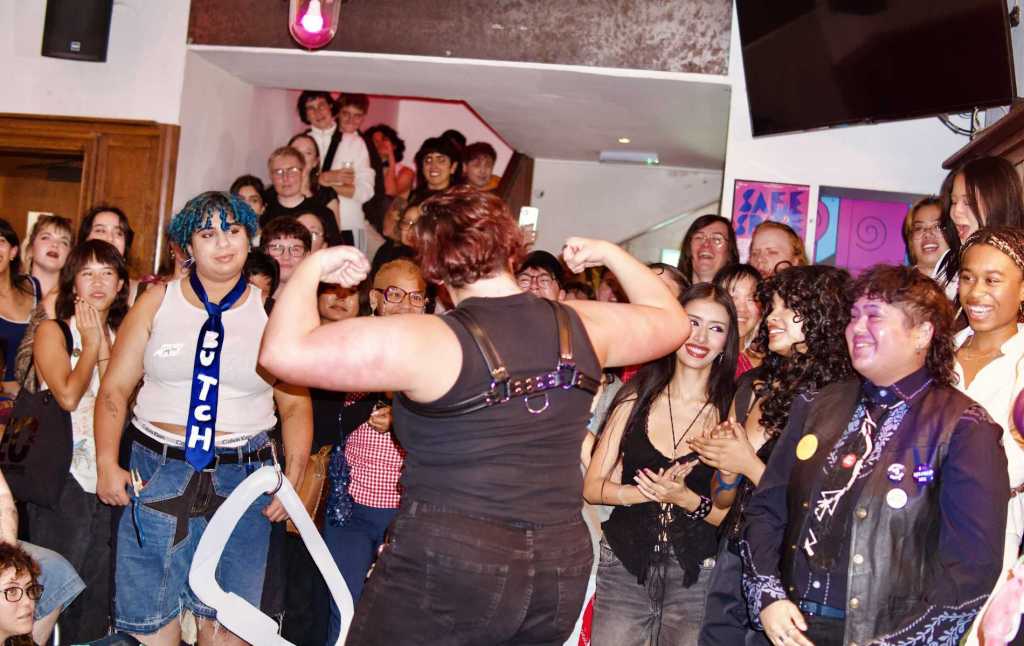
This year, friendly competition was at the forefront of the agenda. Sapphics across the globe took part in contests that decided everything from who is the most performative masc, to who is the best dyke Santa and who can eat pies the quickest – the latter’s competition’s award for ‘best technique’ going to an octogenarian lesbian who described her winning method as “savouring every morsel of crust hidden beneath those sweet hills and valleys”.
Much in the same vein as the widely-attended viral look-alike competitions of 2024 – one of which actually saw a lesbian take second place at a Zayn Malik look-alike event – the viral performative masc contests are a lesbian spin on the popular and sardonic ‘performative male’ competitions that were held around the world this year, and in themselves went wildly viral.
The performative male contests poked fun at a particular type of fake-feminist man. One who picks up “traditionally feminine hobbies with the sole intent of cultivating an inauthentic aesthetic that might appeal to progressive women”, as described by Book Club Chicago‘s Charles Thrush. GQ‘s Mahalia Chang said such men are “twenty-something guys reading green-flag feminist literature and drinking overpriced matcha lattes. They carry Labubus and disposal cameras. Not because they especially love those things – although, yeah, some of them do – but because it’s a material signal to the female gaze, a horny homing beacon blinking out into the Hinge-era dating universe”. Contestants, of any gender, hence showcase their performative maleness by reading copies of The Bell Jar upside down or claiming to listen to Clairo or Laufey – even though their wired earphones aren’t plugged in.
The performative masc contests were then, in turn, a similarly tongue-in-cheek type of event where folks acted out being the most performatively masc they could – such as wearing multiple – or oversized – carabiners and carrying round a copy of Stone Butch Blues.
All the events that took place this year, regardless of what they actually were deciding, were all about bringing the queer community together and sharing in our unique history and culture – as well as having some silly fun.
Gelphie saying “I love you”
Spoilers for this one!
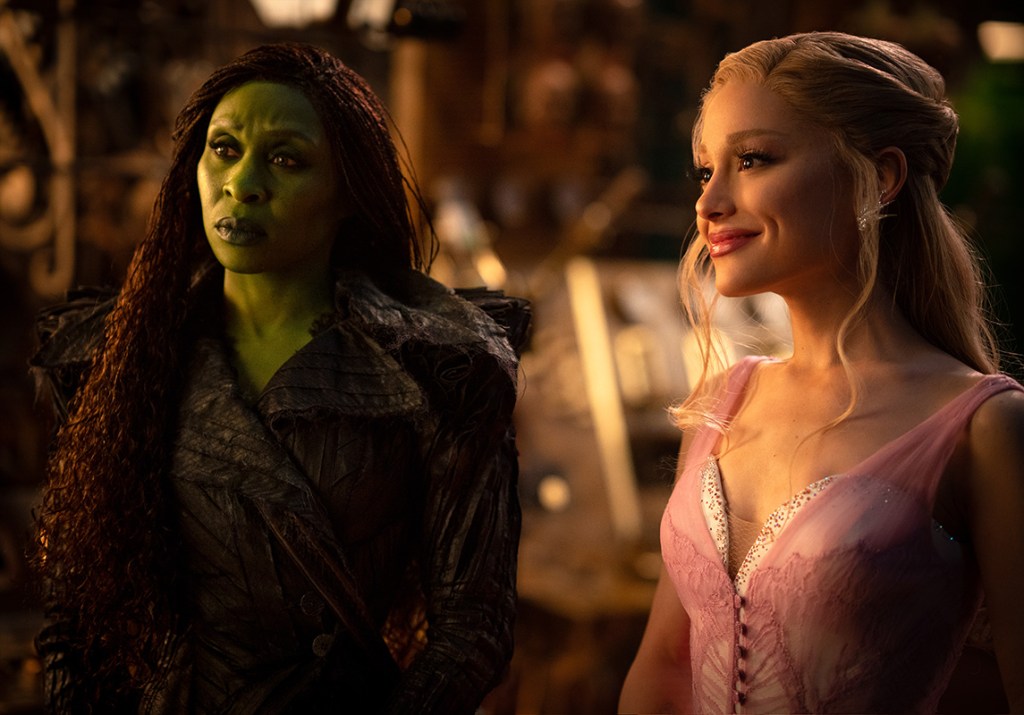
This November Wicked: For Good, the second part of Jon M Chu’s two-part adaption of Broadway and West End hit musical Wicked – which itself adapted from Gregory Maguire’s 1995 dark fantasy version of the original Wizard of Oz story by Frank L Baum – was released in Cinemas and Gelphie fans were fed.
Now, we didn’t get Gelphie canon unfortunately, but we did get a moment so poignant, so achingly tender, so symbolic, that shippers will be unpacking it for years to come: the door scene.
The moment, which comes right at the end of the film, sees Elphaba give Glinda the Grimmerie and urges her to make positive changes to Oz before hiding her in a closet (a literal closet!) as Dorothy comes to kill Elphaba.
The two women share an emotional “I love you” – which could be read as platonic or certainly something more – before Elphaba closes the closet door. Through a split-screen, we see both women, either side of the door, sobbing, leaning their heads against the wood and pressing a kiss to the physical barrier between them.
We will never be normal about this.